
Great stuff as always!
Free shipping on orders over $99 (contiguous U.S.)
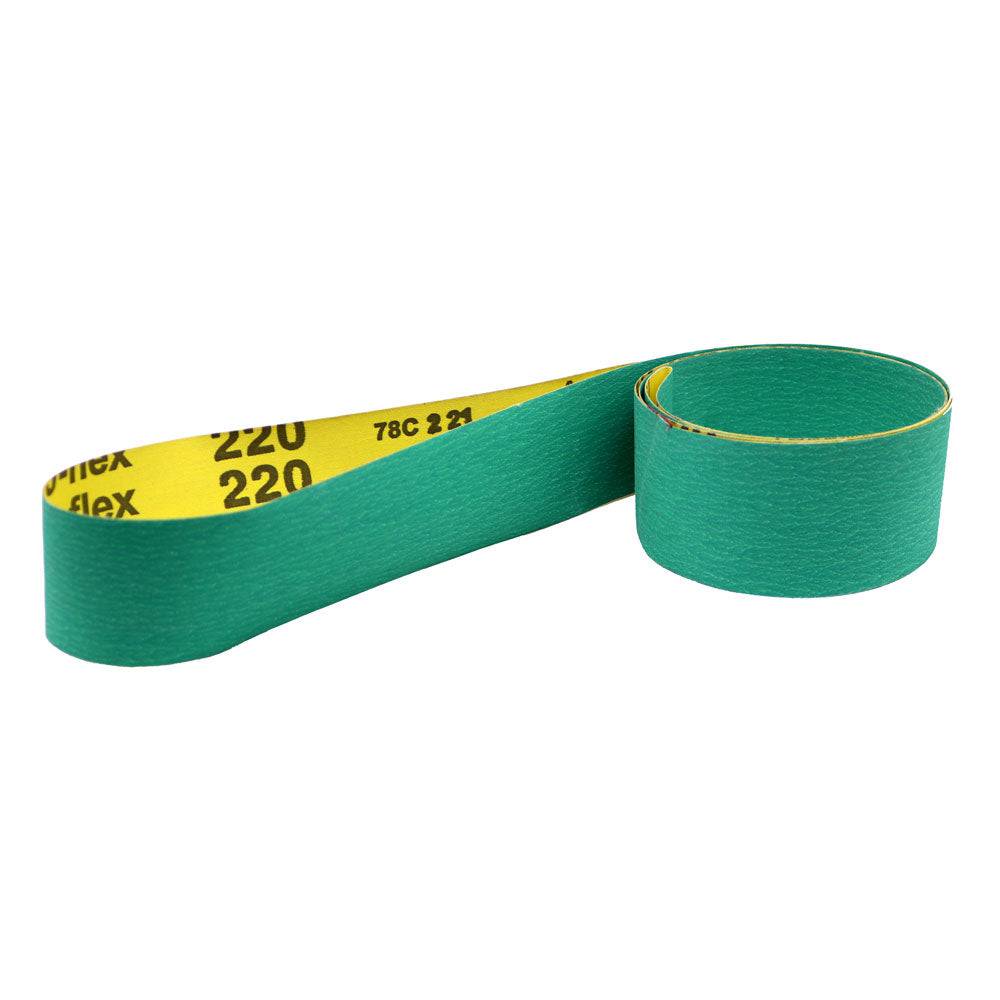
Profiling blanks: 24–40. Grinding bevels: 36–60 (60 is the most popular all-rounder). Refining: 80–120. Handle contours and pre-finishing: Ceramic J-Flex 220. Full guide further down this page.
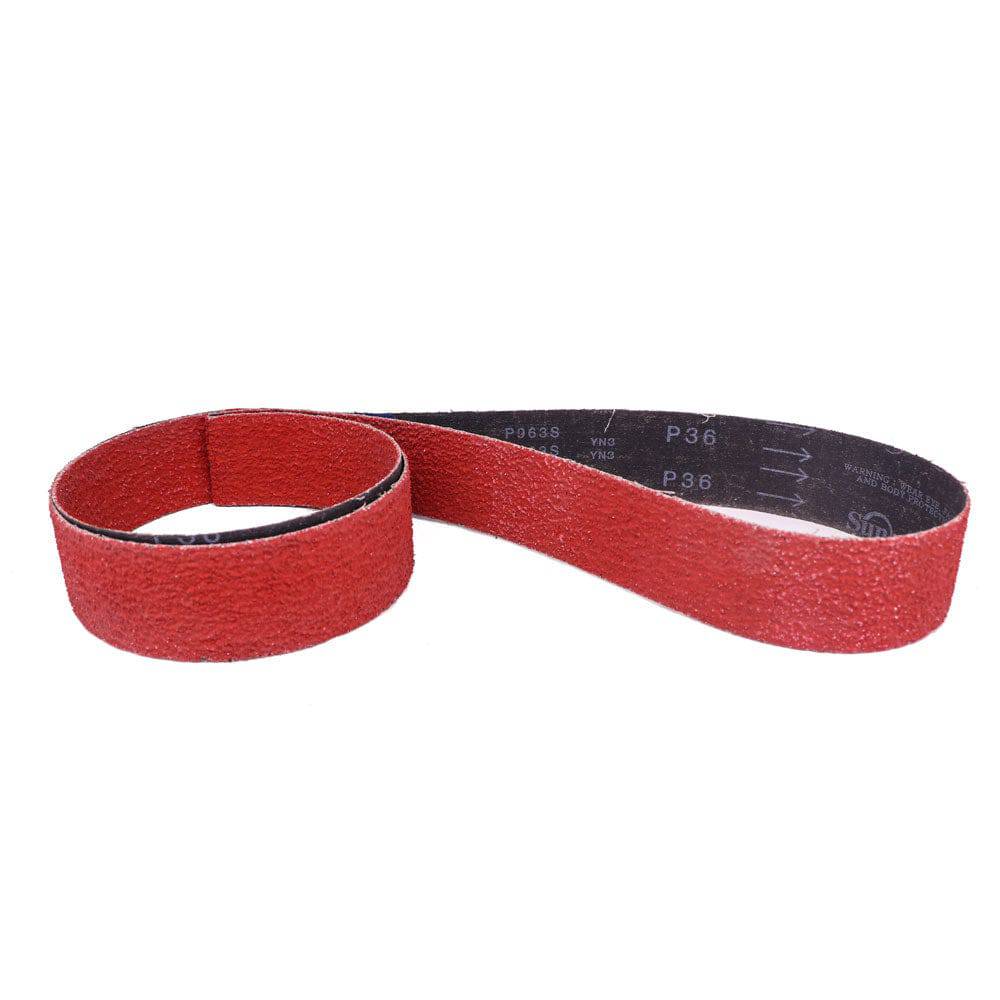
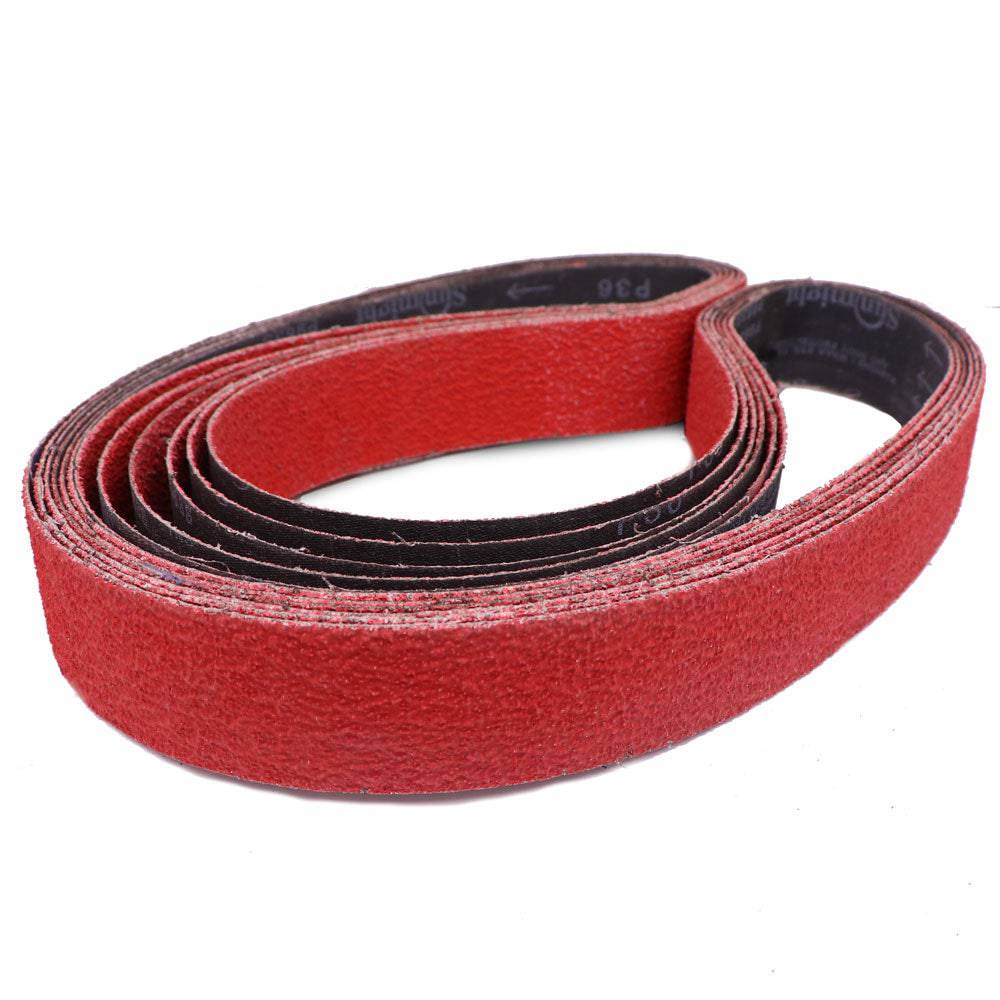
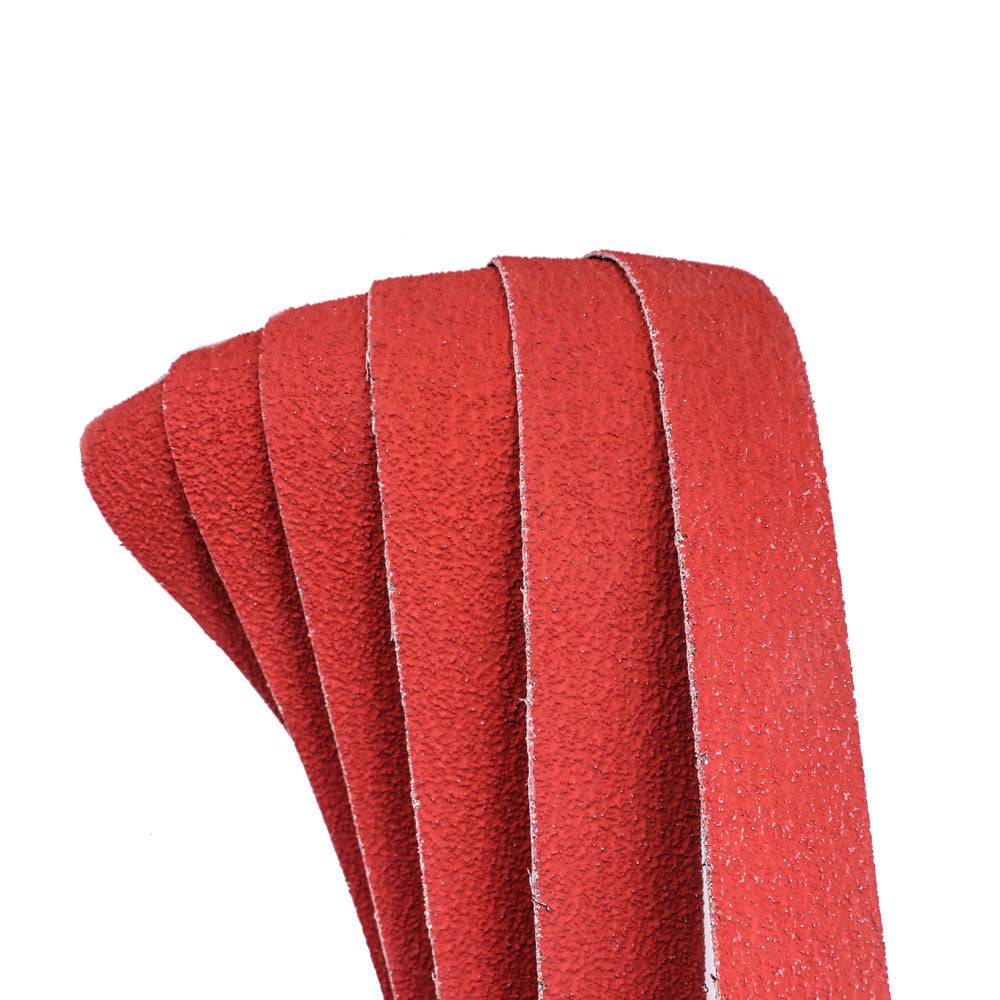
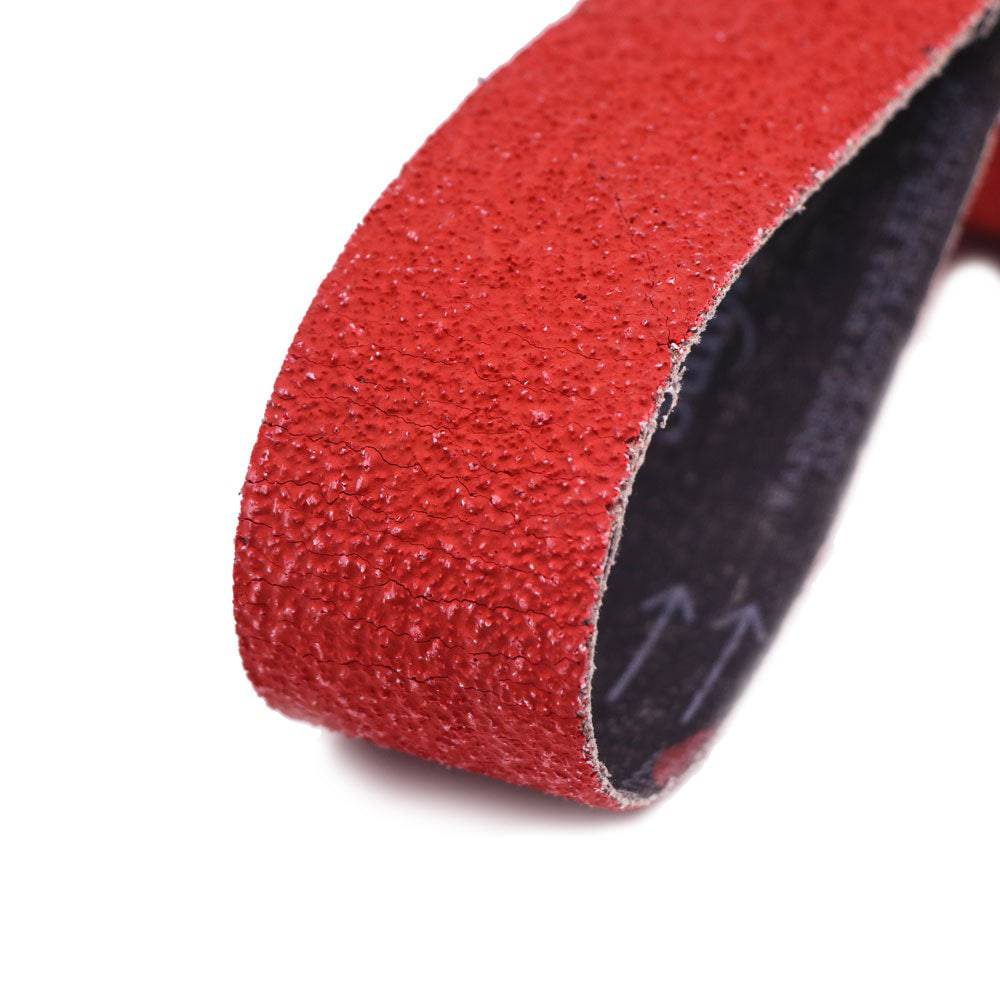
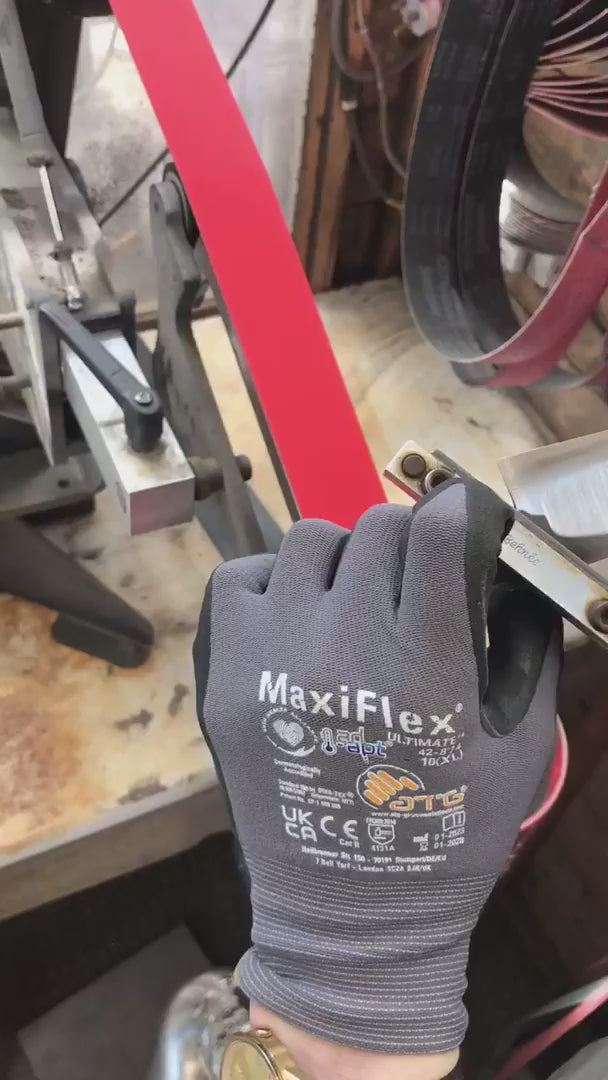
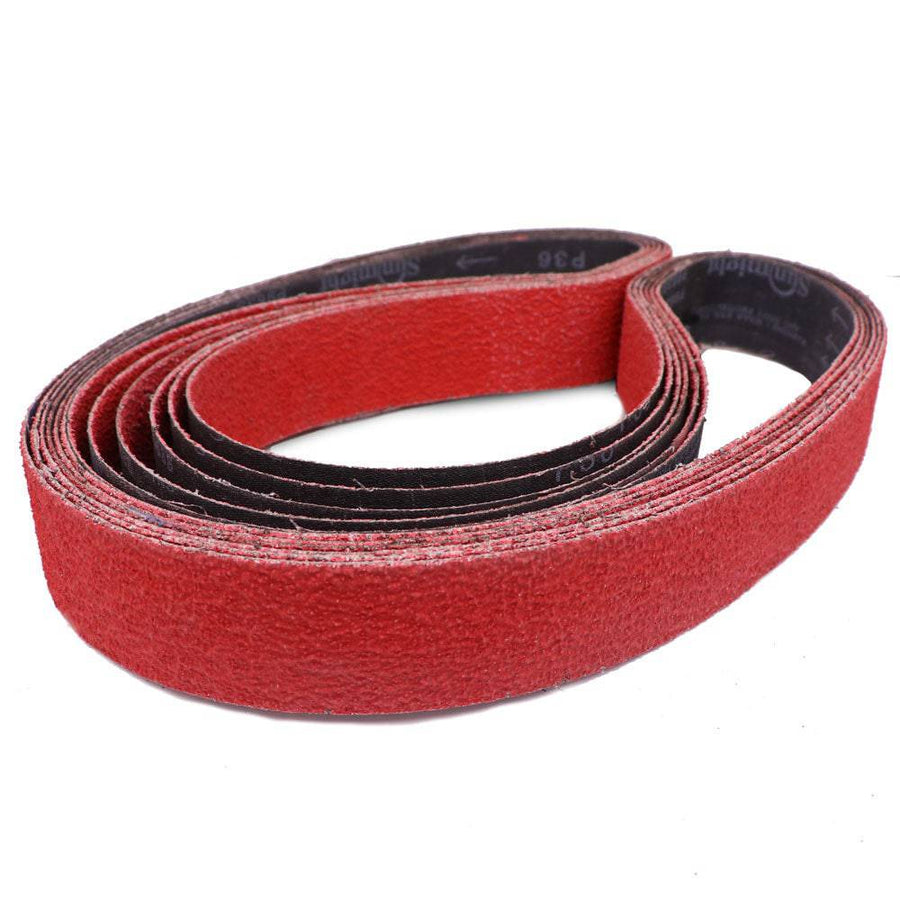
Cheap belts dull fast, load up, and dump heat into your steel — which matters even more after heat treat. Combat's Shredder belts are built for the opposite: aggressive stock removal on steel, stainless, and aluminum, using ceramic abrasive grain — the orange-red grain you can spot instantly — bonded to a heavy-duty Y-weight polyester backing.
Ceramic grain continuously micro-fractures as it wears, exposing new sharp edges instead of rounding over. The result: a consistent cut rate, lower heat, and belt life customers consistently say outlasts budget belts several times over.
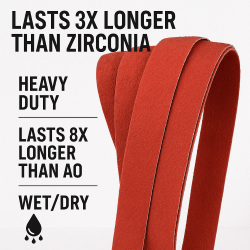
Upgrading from zirconia? Zirconia was the traditional stock-removal belt, and ceramic is the newer generation of that technology — most makers who switch report faster cutting, cooler grinding, and longer belt life. If you're still running zirconia for heavy removal, this is the line to step up to.

Grit-by-grit
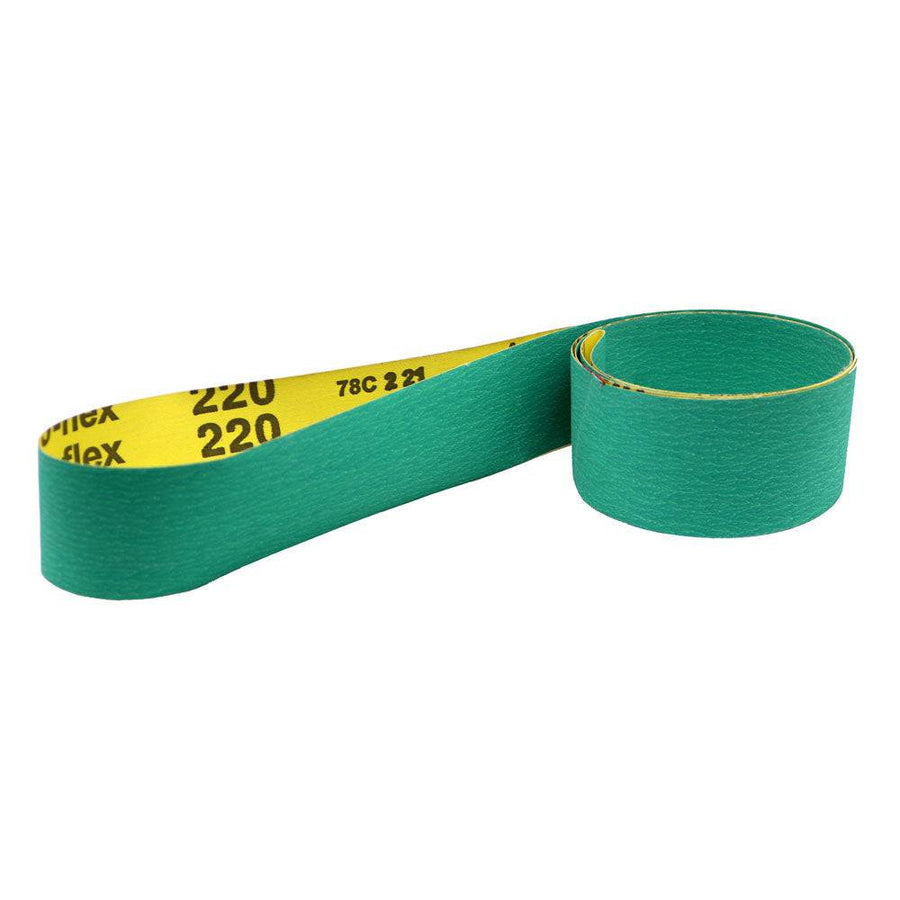
Shredder – Ceramic (24–120 grit, stiff Y-weight backing, wet-capable) covers profiling through refinement. Ceramic J-Flex (220 grit, flexible backing, dry use only) handles contours and pre-finishing. A common progression: profile at 24–40, grind bevels at 36–60, refine at 80–120, then move to our aluminum-oxide finishing belts and a leather strop. Prices shown per 3-pack.
Most aggressive. Heavy plate and maximum removal rate.
The go-to for initial bevels; also tears through handle wood.
Profiling with a slightly finer scratch pattern.
The all-rounder most reviewers reach for.
Refining bevels before moving to finer work.
Post-heat-treat grinding; smooth running.
Transition toward finishing; slack-belt contour work.
Suitability
Use these belts for
Not the right belt for
1. Match the belt to your grinder. These are standard 2" x 72" belts — customers run them on Wilton Square Wheel, Burr King 972, Hardcore, Bader, Bob Dozier, AMK and Ameribrade machines. Confirm your machine takes 2" x 72" belts before ordering.
2. Track the belt and let it reach speed before touching steel.
3. Use firm, steady pressure. Ceramic grain needs pressure to keep fracturing and exposing fresh edges.
4. Run wet if your setup allows — grits 24–120 are wet-capable and stay cooler.
5. Step through grits rather than jumping — 36 → 60 → 80 → 120 leaves scratch patterns each following grit can remove.
6. Replace the belt when the cut rate drops noticeably or it starts rubbing and heating instead of cutting. Worn coarse belts still earn their keep on light profiling.
7. Store belts dry, flat or hung wide — especially the J-Flex.
Technical details
The details behind the product — backing science, grain technology, wet use, and safety. Open any topic.
Abrasive is glued to a backing, and the backing's thickness is graded by letter. A through F are paper backings — flexible, but not built for metalwork. X and Y weights are cloth/synthetic backings and are the metalworking standard: Y-weight is a sturdy full-polyester backing (what Shredder belts use), while X-weight is often a more flexible cotton-poly blend. J-Flex is the most flexible class — run with slack so it can softly contour rounded shapes like handles.
Zirconia alumina was the standard stock-removal grain for years. Ceramic grain is the newer technology: its structure keeps fracturing into fresh cutting edges, so it cuts faster and runs cooler, and the market for coarse-grit metal grinding has largely moved to ceramic. This page sells ceramic only — if you're comparing against zirconia belts you already own, ceramic is the upgrade path. For grits finer than about 120, premium grains matter less, which is why our finishing line uses aluminum oxide.
Shredder Ceramic belts in 24, 36, 40, 60, 80 and 120 grit can be run wet, which helps keep stock cool. The Ceramic J-Flex 220 cannot be run wet — its flexible backing isn't made for it.
Grinding metal produces fine dust and sparks. Wear eye protection and a properly rated respirator, and follow your grinder manufacturer's safety guidance. We recommend a full-face respirator like this one on Amazon — inexpensive protection that goes a long way.
How ceramic sanding belts are made
Complete the progression
Finishing & Sharpening belts
Aluminum-oxide 2" x 72" belts from 36 to 800 grit — the step after stock removal, through to a refined edge.
Surface Conditioning belts
Non-woven 2" x 72" belts from coarse to ultrafine for blended, decorative finishes.
2" x 72" Leather Belt
Load it with polishing compound to strop and finish your edge. Most makers keep one per compound.
Questions
They're standard 2" x 72" belts — the most common knife-grinder size, used on machines like the Burr King 972, Bader, Wilton Square Wheel and Ameribrade grinders. Check that your grinder's spec lists 2" x 72" before ordering.
Shredder (24–120 grit, stiff backing) is for profiling, bevels and heavy stock removal. J-Flex (220 grit, flexible backing) is for slack-belt contour work like handles, and for bridging into finishing.
Most makers profile at 24–40, grind bevels at 36–60, then refine at 80–120. If you're buying one pack to start, 60 grit is the most common all-rounder in customer reviews.
Shredder Ceramic belts in 24–120 grit: yes. The Ceramic J-Flex 220: no — its backing isn't made for wet use.
Three belts of the material and grit you select. For mixed grits, see the Shredder Combo Pack (60 + 120) and the Shredder Belt Starter Kit.
When the cut rate drops noticeably or the belt rubs and heats instead of cutting. Worn coarse belts still work for light profiling, as several customers note.
Spend your time grinding, not changing belts
Pick your grit, confirm your grinder runs 2" x 72" belts, and get a 3-pack of ceramic Shredders on the machine. Rated 4.9★ across 957 reviews from working knifemakers and fabricators. Free shipping over $99 (contiguous U.S.).
Overall rating: 4.9 / 5 from 964 reviews.
Great stuff as always!

Best belts out there!

Great product and service!

I’ve tried other options, and your belts end up saving me money. That’s what counts. They cut longer

This handle is stabilized curly maple. I’ve run this through the buffer and then molded the sheath to it. If I run it through the buffer again, it’ll be even brighter. The reason I’m bringing this up is because the green J flex belts from combat abrasive left a nearly perfect finish on this. You can see the inside curves are bright and beautiful. This is without a second round on the buffer! If you’re not aware, J flex is an extremely soft backing that is really good for shaping the contours of your handles. You can use it against The radius of your wheels, obviously, but it’s really good when you provide some slack and no backing. Fantastic results! Add some J flex to your arsenal.

When I first started grinding my knives, I was on a very tight budget. I immediately shopped around for the least expensive ceramics I could find. Unfortunately, I used those belts for almost 2 years. I’m often grinding A2 tool steel post heat treat, and I was burning through belts right and left. finally, I tried combat abrasive shredder belts. It was like night and day! I couldn’t believe what I was missing out on this entire time. If you’re not using high-quality ceramics for your bulk material, Removal… Give it a try. Now I spend 50% less time grinding. That’s a significant improvement. Don’t be stubborn, don’t save money on your primary weapons… You’ll be glad you invested.

The attack pictured is of a butcher knife I made using combat abrasive belts . Awesome belts far superior to others I’ve used.

I like the 120 belts for the post heat treat grind they run super smooth

The belts work great takes alot of metal off very fast.

I love Combat shredding and JFlex belts. They make knife making more effective and enjoyable.

great product.

Love your belts they work great. I use a lot of them!

Love the belts! These don't wear as fast as others I've used and I'll be able to grind more knives before switching out the belts

Great belts. I always go to combat abrasives for my grinding needs

The 36 grit ceramic is the best belt I have. Great for beveling and the used ones last forever profiling.

Great product as always. I use these belts nonstop for metal and wood work. True shop workhorse!

Abrasive's that never let you down!!

Love my belts, just wish bought more at the time..

Love my belts. Wish bought more when placed my order!

Combat ceramic belts are amazing. They last longer than any other belts I have used over the years

Combat abrasives belts are absolutely amazing. I have purchased Neil’s 2x72 kit and have restocked with the shredder packs multiple times. These belts absolutely chew through steel during the profiling and initial grinding. Even after the blades are hardened, combats belts help reduce heat build up and remove and polish material quickly. I also use the grease stick. These belts are amazing Chris Gregory TwoTongues Forged Knives

Can’t beat these belts!

Works great, still on the first belt these eat steel like its not even there.

I’m loving the ceramic belts. These are and have been my go to belts.

Used this belt to tiller a spring steel limb recurve bow without creating soft spots from heat. Worked beautifully.

Of course, I use new belts on new knife projects, but I keep my old belts for regular grinding jobs of odds and ends, and they still work very well.

The belts cut very well, especially when you use the conditioner stick..

Awesome belts at a great price

Love there stuff ceramic belts the only way to go

The Shredder is rightly named!

Best belts! Makes easy work of material

Combat always does right by me! Wonderful products and fantastic service.

Would not use anything else

Made the shaping of the knofe and handle easy

Great belts. Wouldn't use anything else!

Belts work great

They work well and last a long time

They work well and last a long time

Great customer service and the belts last longer then the competitors I'm very satisfied

I love your belts Thank you Greg Klines Originals