


Great belts and even better service!
Free shipping on orders over $99 (contiguous U.S.)
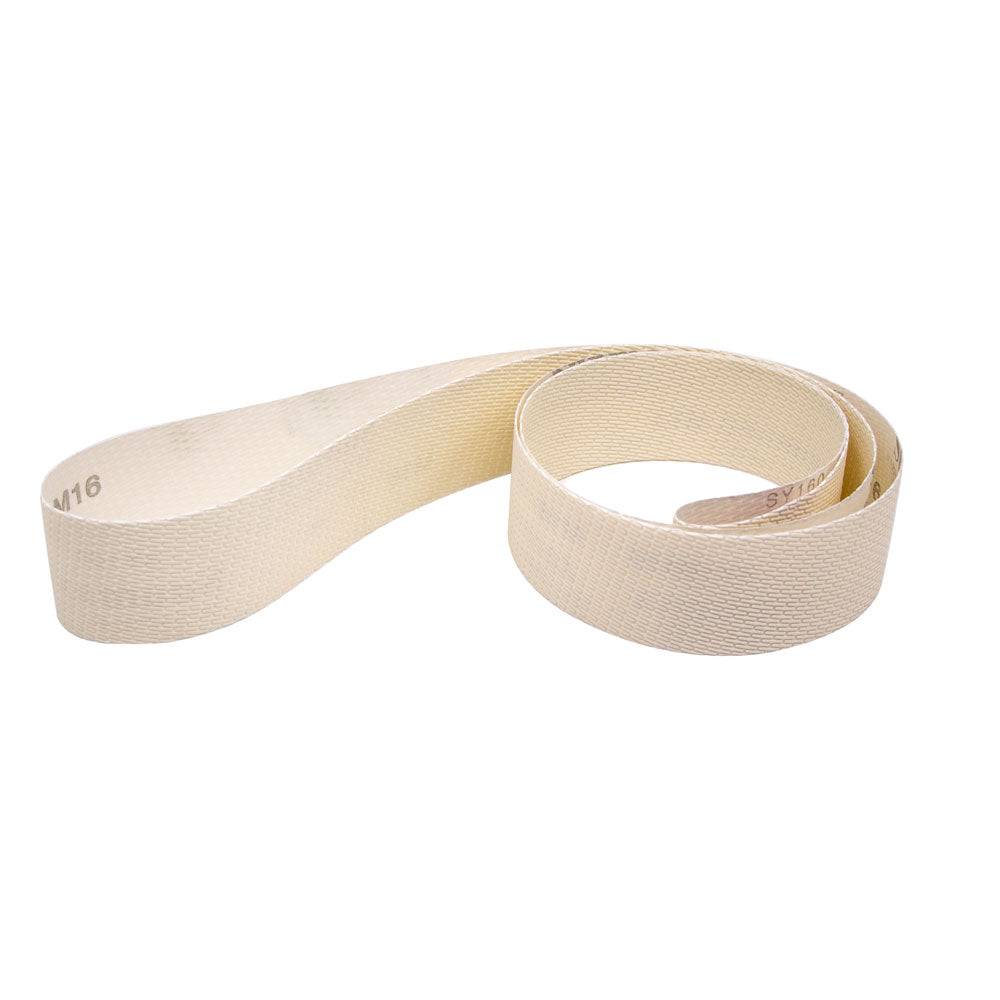
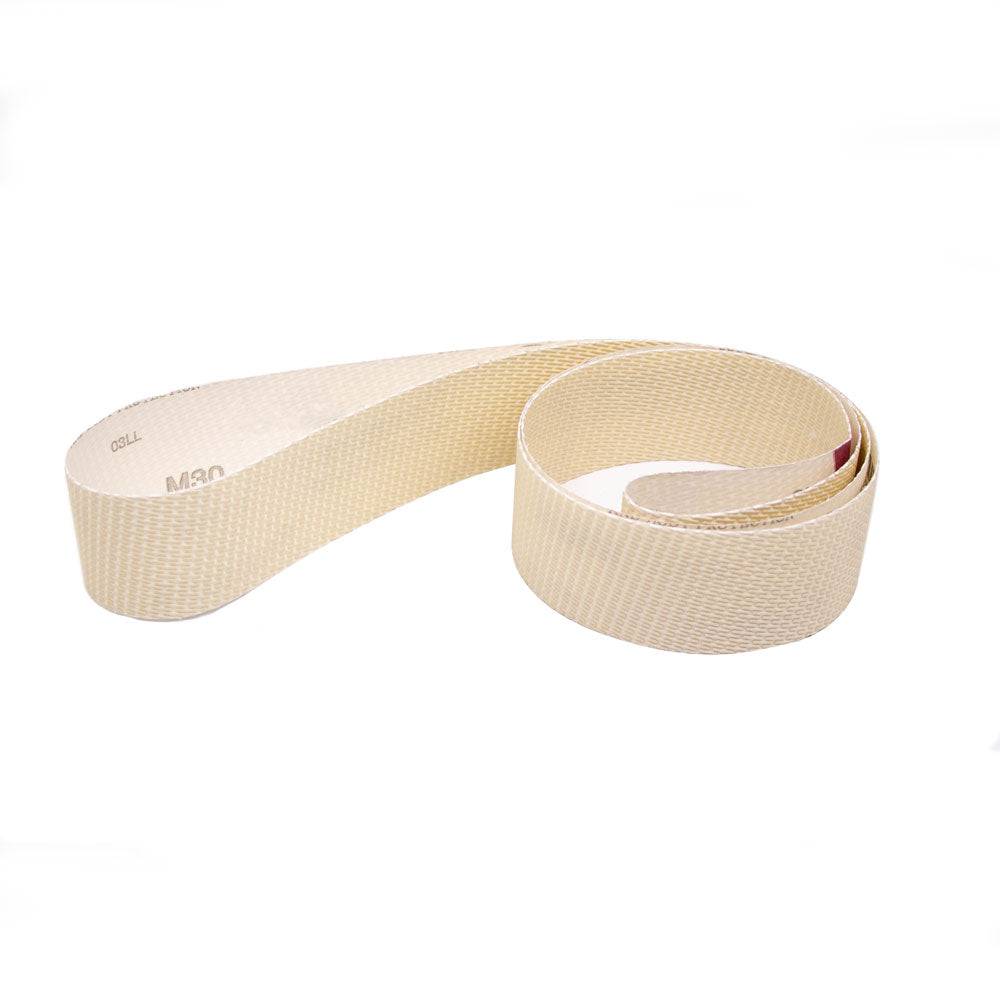
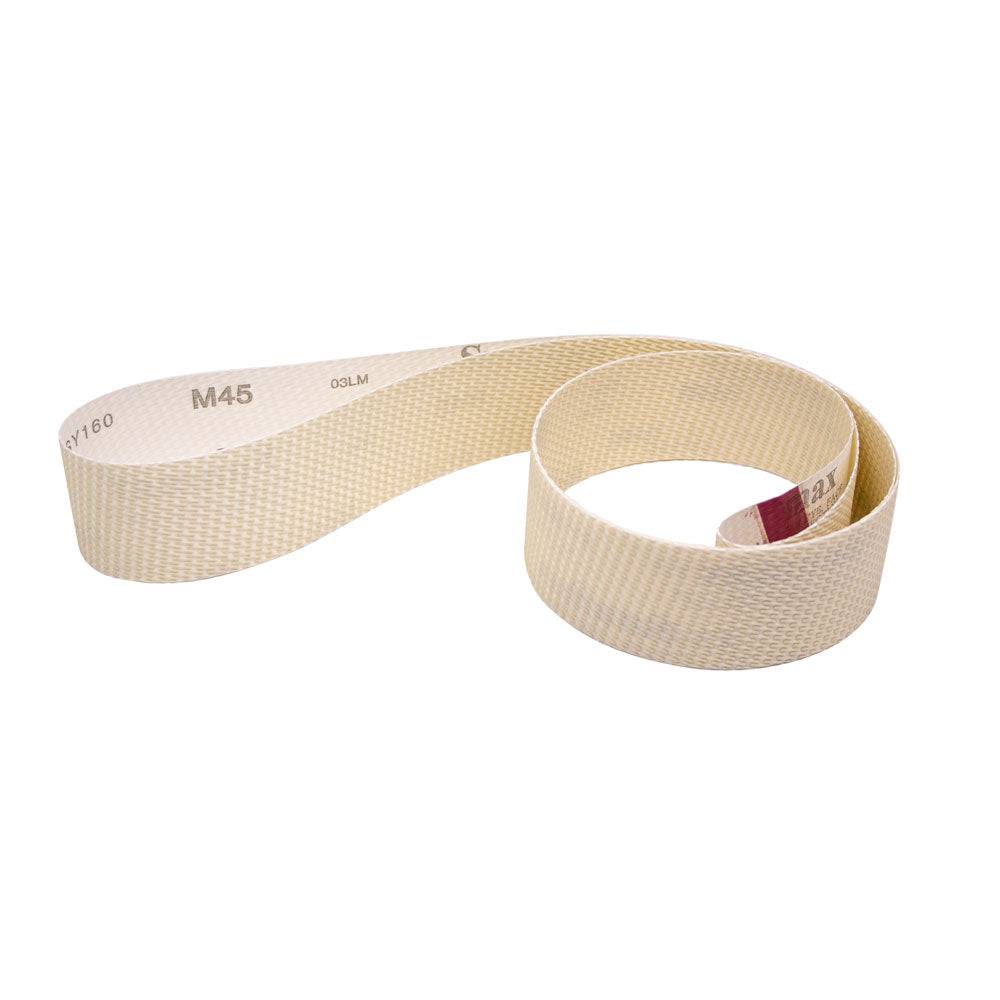
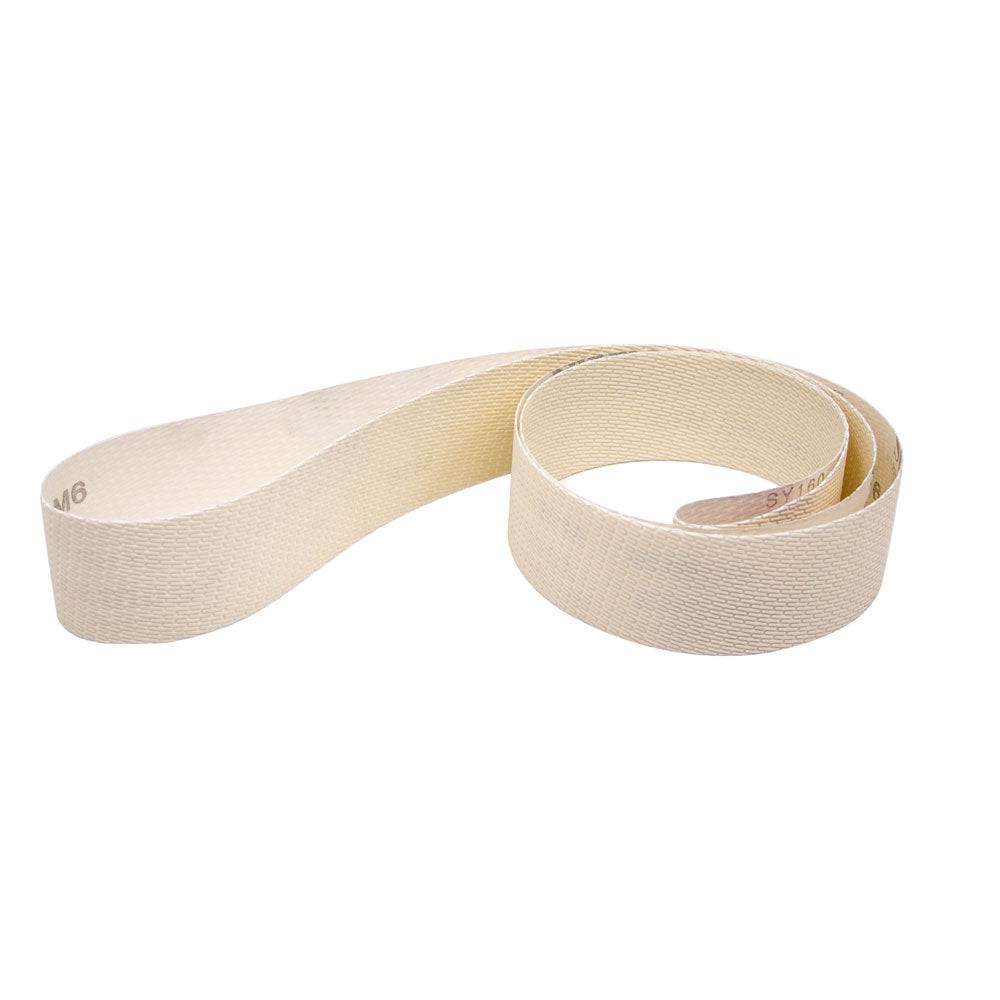
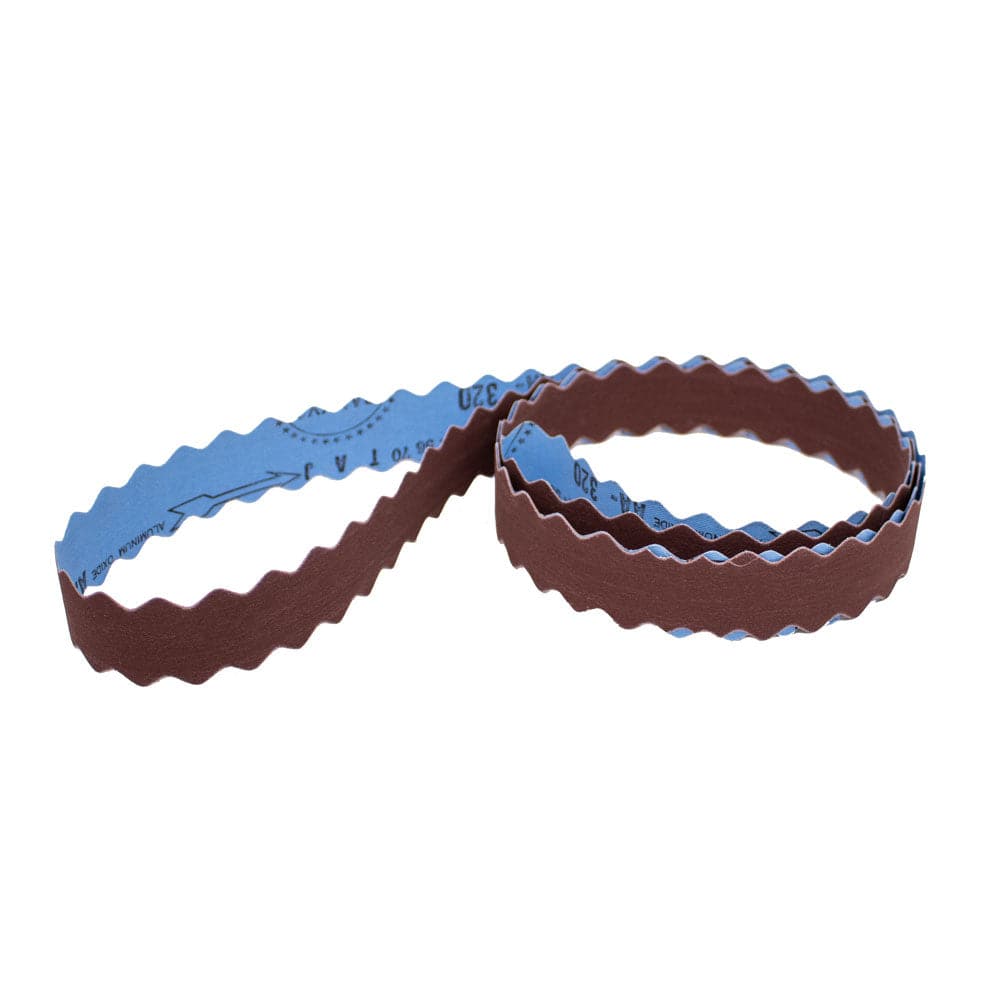
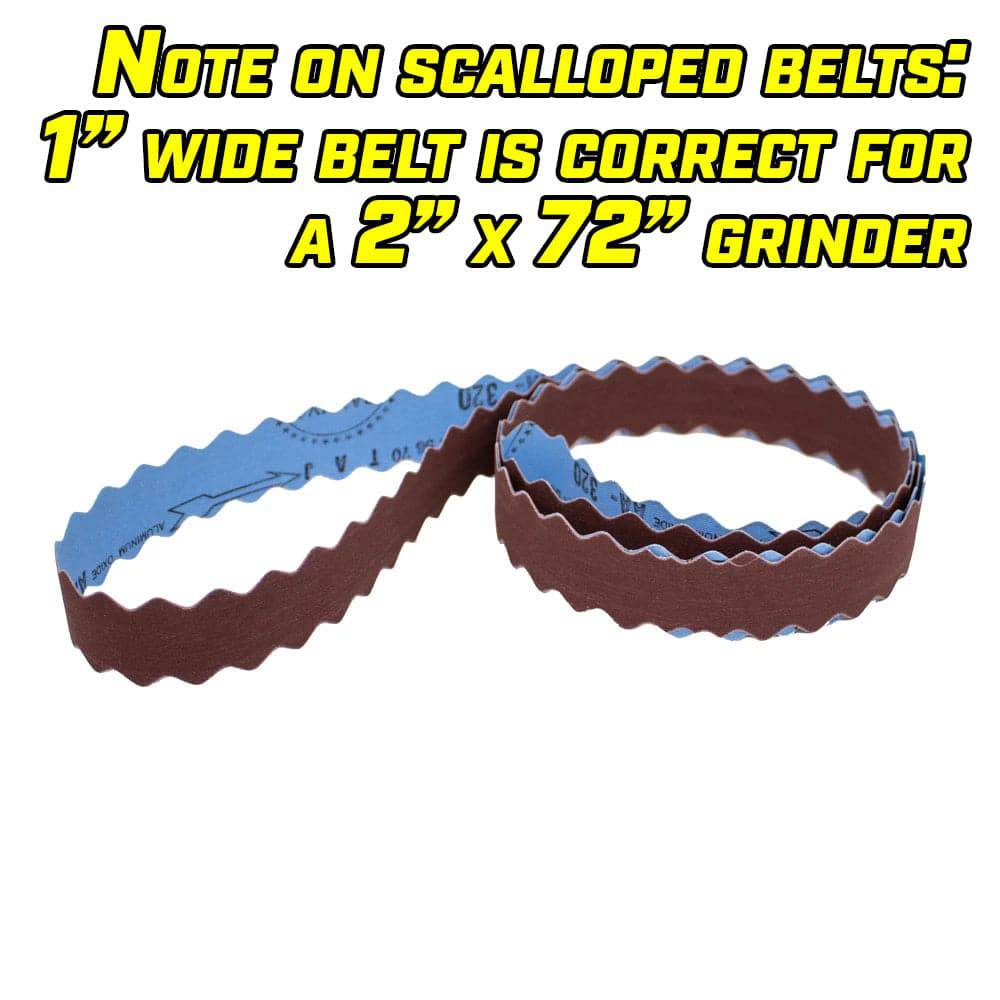
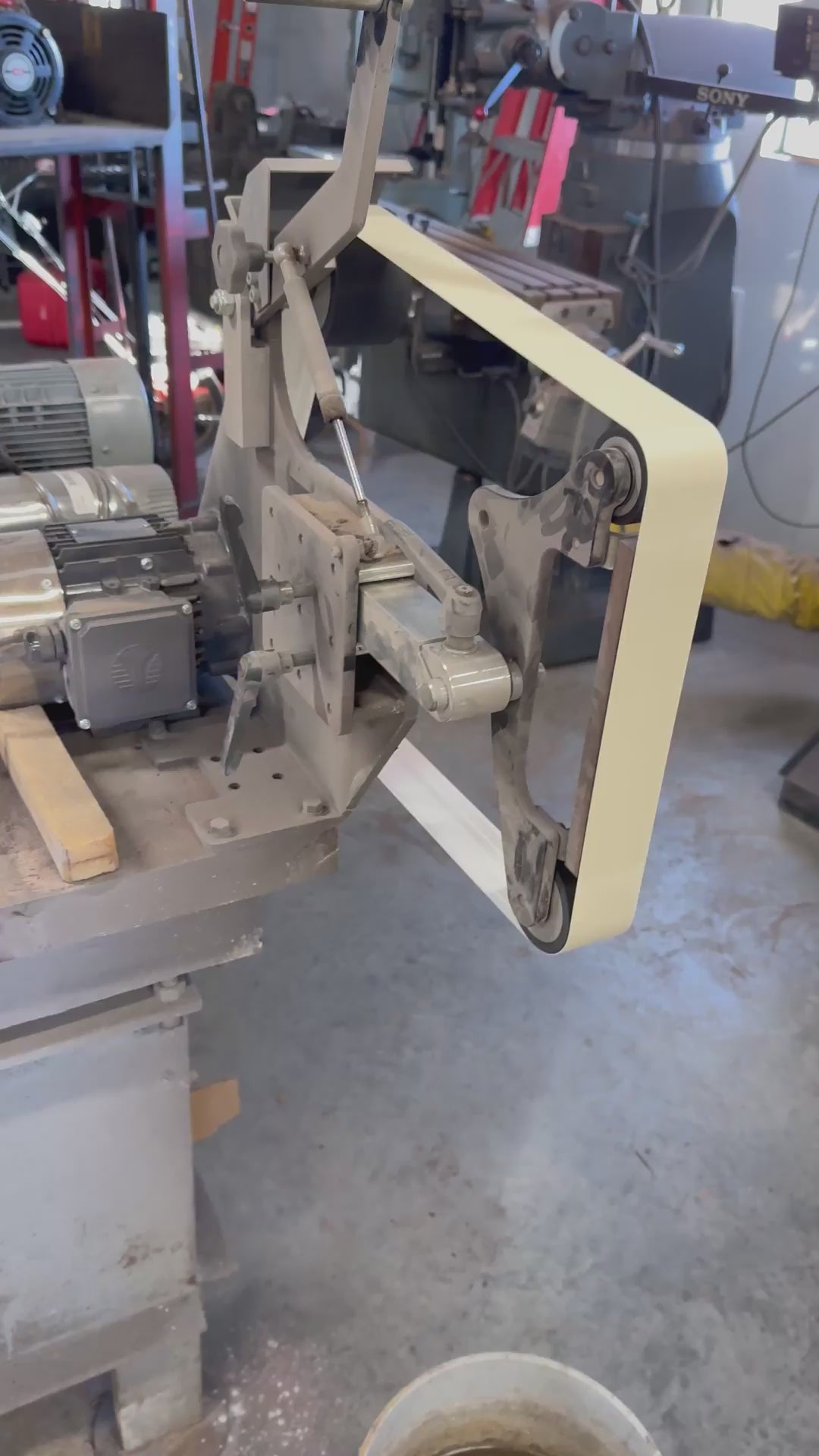
The scalloped-edge belts are 1″ wide by design — that’s the correct size to run on a 2″ x 72″ grinder for slack-belt contour work.
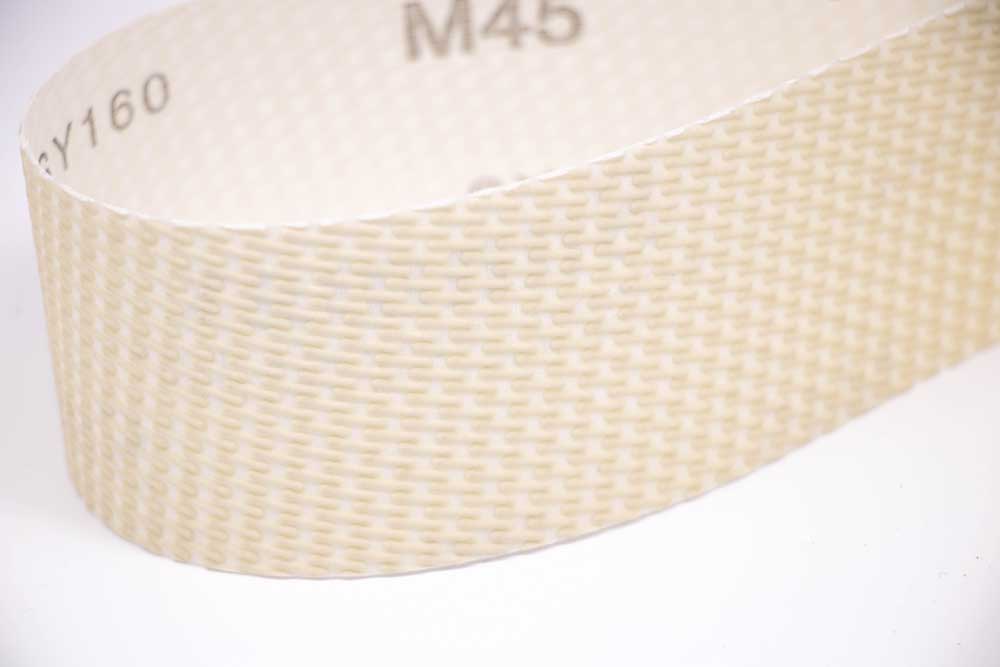
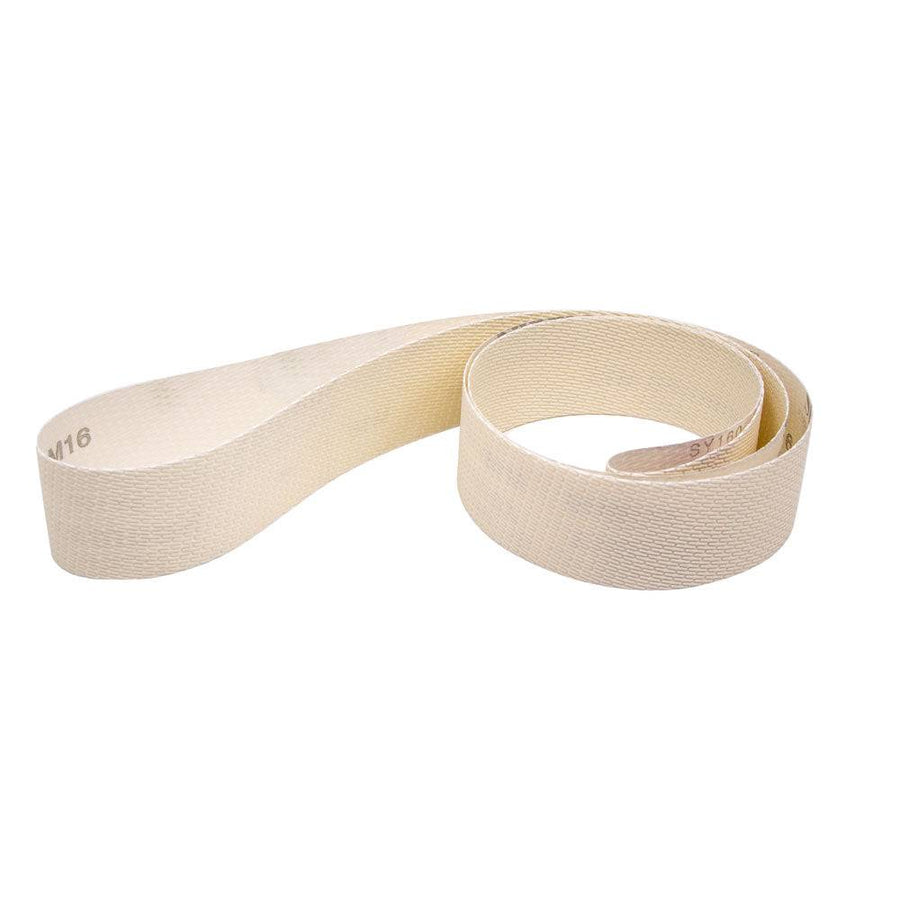
Structured abrasive belts stack precisely engineered abrasive shapes instead of random grain. The result is an extremely consistent scratch pattern in ultra-fine equivalents — 400 (A45), 800 (A30), 1200 (A16) and 2500 (A6) — that can deburr an edge, refine a bevel, and even build toward a high polish, often replacing hand sanding on a blade.
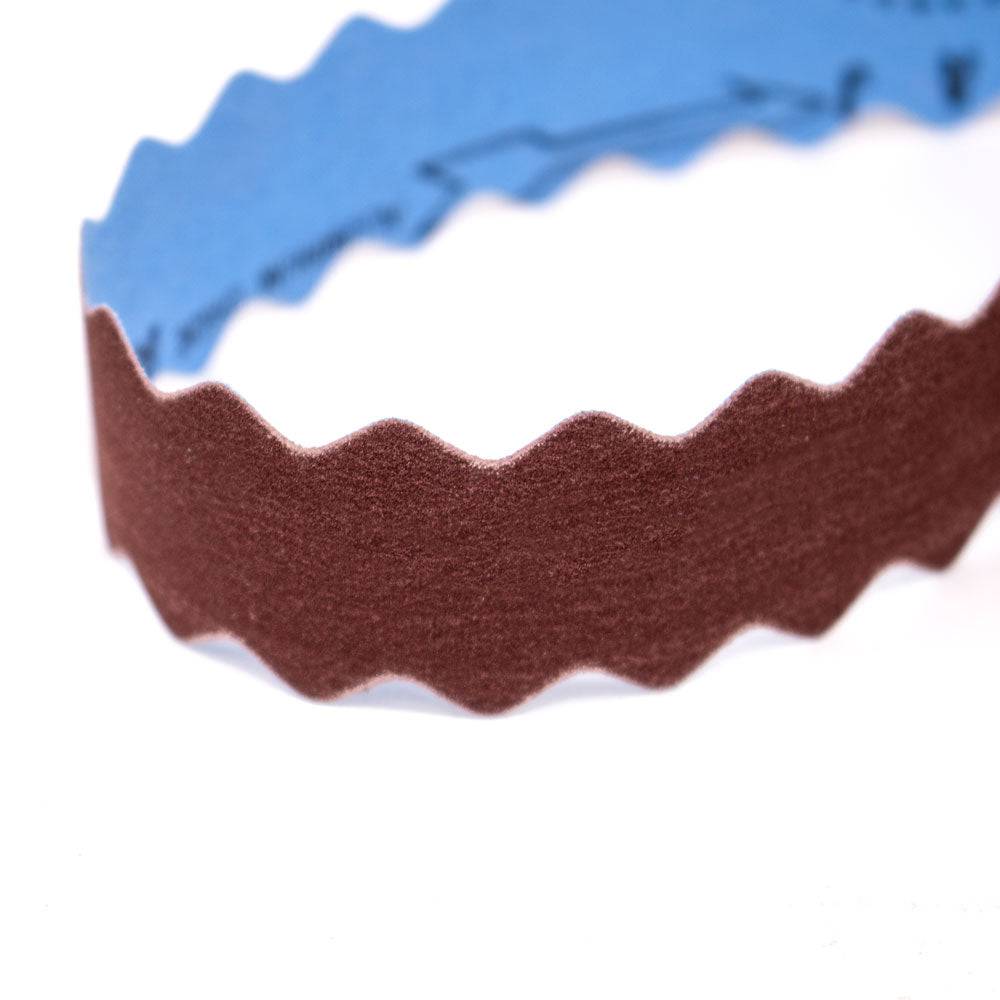
Scalloped-edge belts run flexible J-weight cloth with a wavy edge that won’t dig gouges when you’re contouring — built for slack-belt work on handles and curves.
Options
A-scale grades are approximate grit equivalents.
Entry point to structured finishing — consistent fine scratch after your 320–400 A/O step.
Refined finish; edge deburring and pre-polish.
Very fine — approaching polish territory.
The finest step — high-polish surfaces without hand sanding.
Flexible J-weight, 1″ wide for 2″ x 72″ grinders. Slack-belt contour work only — not for platen or contact wheel.
Suitability
Use them for
Not the right belt for
How scalloped-edge belts work
Technical details
Instead of random grain, the abrasive is formed into engineered structures that wear evenly — delivering an unusually consistent scratch pattern at ultra-fine equivalents. Grade-to-grit conversions (A45≈400 etc.) are approximate.
The 1″ width plus the wavy edge is intentional: it lets the belt flex and wrap contours in slack-belt use without leaving hard lines or gouges. It’s the correct size for a 2″ x 72″ machine.
Both styles run on standard 2″ x 72″ grinders — scalloped belts in the slack section only.
Wear eye protection and a properly rated respirator. We recommend a full-face respirator like this one on Amazon.
Complete the progression
Finishing & Sharpening belts
Aluminum-oxide 36–800 grit — the step after stock removal.
Surface Conditioning belts
Non-woven grades for blended, uniform finishes.
2″ x 72″ Leather Belt
Load with compound to strop and finish your edge.
Questions
They’re structured-abrasive grades. Approximate equivalents: A45≈400 grit, A30≈800, A16≈1200, A6≈2500. Treat conversions as guidelines.
In many cases yes — their consistent scratch pattern takes a blade through fine finishing and toward polish on the machine.
By design — 1″ wide with a wavy edge is the right setup for slack-belt contouring on a 2″ x 72″ grinder without gouging.
No — slack-belt use only. Platen or contact-wheel use defeats the design and can damage the work.
Structured belts come after your A/O finishing steps (from ~400 equivalent onward). Scalloped belts come out for handle and contour work at any finishing stage (120–600 grit).
Finishing tools most shops don’t know exist
Structured belts to skip the hand sanding, scalloped belts to contour without gouges — pick your grade. Rated 4.9★ by 211 customers. Free shipping over $99 (contiguous U.S.).
Overall rating: 4.9 / 5 from 212 reviews.
Great belts and even better service!

Love you products. Never been disappointed in your company!

These finishing belts are great!

Great belts. Will buy again.

The scalloped belts are amazing. Makes it easy to shape handles without a hard gouge from the sharp edge of a regular belt. However, what's even better is the Relentless Oxygen 8 Foaming Face Mask I recieved with the order. After a long day in the shop, it leaves my face and head (I'm bald) feeling super clean and moisturized. I have looked, and can't seem to find that option on your website. Thanks for making a dirty old man feel clean!

This has taken my crafting experience to a whole new level, and the time has been reduced. Thanks

Great belt

My experience with Combat Abrasive was top notch. I'm completely satisfied!

Used the A45(400 grit) structured belt to finish this blade prior to etching. These structured belts are amazing. This was my first time using them and I absolutely love them.

Tracks exceptionally well and conforms to smooth radius shapes and stuff.

The scalloped belts are a game changer when doing radius’s.

These belts are key to our success at Tiller. First, they meet our requirements for a premium MADE IN USA product as everything that comes out of our shop, is squarely American, from the consumables, to the materials, and all the labor. Tip to tail its all done here. Second, these belts increase our productivity about 30X. Grateful these belts exist as they are a core consumable used daily here at Tiller. Bringing premium fishing equipment to commercial, and recreational offshore anglers alike!

The more I use these, the more ways I learn how to save time and do a better job.

Combat Abrasives is the only place I'll get my 2x72 belts, great quality, wide selection, and was shipped the same day I ordered.

These belts helped me get around those smooth edges.

Last forever

Great product!

If your not using the 1” X 72” Scalloped belts on your handles your missing out.

Perfect for handle shaping, gets in tight spots without gouging.

Buy them they work.

Excellent

Using these belts I was able to put a nice finish on this cleaver.

I am yet to find a Combat belt I don’t like. From fit to finish I do it all with Combat Belts.

The scallop belts are incredible look at the curves on this handle so smooth. No more grind pits!!!!

Great product

Makes for easy profiling on this coke bottle, combo scales.

Amazing for shaping knife scales

Puts a nice polish on your edge

Loved these scalloped belts. They brought down the work time on my handles by a ton! Will definitely buy again.

So far so good. It has cut back on hand sanding. The belts have been leaving little diamond shaped marks on the blade. Nothing that doesn’t sand off with ease.

Gets in those books and crannies that other belts can't , leaves no grind lines even on delicate handle materials

I was blown away with how gentle these belts are with the finishing process. No fear of accidentally gouging in a line or notch by accident.

The time I save with the 1inch belts is fantastic! The finish can’t be beat!!!

This belt provides a great smooth finish, unlike anything I was able to get before I purchased this belt! I have 120, 230 and 320. I will be ordering fiber grit belts next time!!!

Me a jason grinding using shredders. I also use the serrated belts for fine finishing handles

Love the ability to shape my knife handles

Love how these belts help me shape the handles on my knives

I love using these scalp belts on my knife handles. They make everything consistent but also keep those rounded edges perfect and smooth.

Love these belts

Game changer right here, best for all your handle shaping needs